
When choosing between single- and double-pane windows, dual-pane windows are sure to win. They’re more energy-efficient than single-pane windows and more affordable than triple-pane windows. However, older or badly-installed windows may become “foggy.” Should you replace your home’s foggy windows, or can you have them repaired? Our guide reveals the answer.
Old windows typically have one pane of glass. Even if the glass is sealed correctly, that doesn’t do much for insulation and energy efficiency. Modern windows, on the other hand, usually have two or more glass panes right next to each other to form an insulative barrier against outdoor temperatures. These are called insulated glass units (IGUs) or double-pane windows.
Dual-pane windows consist of two panes of glass with air or an inert gas trapped in between. The inert gas is usually argon – as with Renewal by Andersen® windows – or krypton, and it is a more effective option. Well-constructed dual-pane windows have special seals that prevent the air between the panes from escaping and deny air and moisture ingress.
IGUs protect the home’s interior from external temperatures by slowing the transfer of heat or cold through the window. Even if the window seals appear fine, they may degrade over time, leading to slow gas leaks or complete seal failure. In some cases, the seals may fail, allowing the gas to escape more quickly. When this happens, the dual- or triple-pane glass window will lose its effectiveness as a temperature barrier.
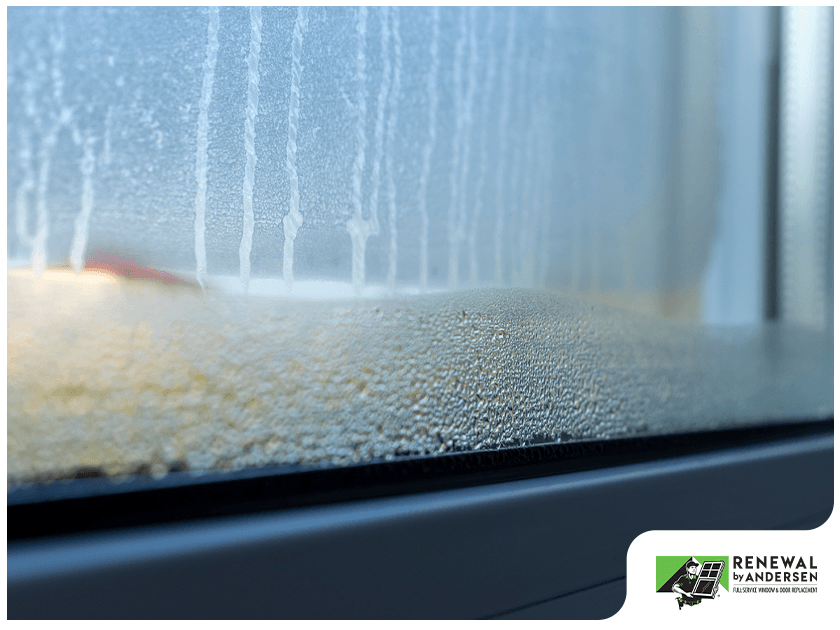
Dual-pane and triple-pane windows may start to look foggy when condensation forms between the window panes. This is generally the result of a failing or damaged seal, which allows the inert gas to escape and offers ingress to air and moisture from outside the window. Windows may look foggy due to condensation on the outside.
This is an expected outcome in the long term. The aspect to consider here is window quality. While all IGU seals degrade over time, higher-grade windows will last longer than cheaper alternatives with lower-quality designs.
In addition to age, storms and damage may also lead to foggy windows. When hail or other damaging events break the window or window seal, it creates an entry point for air and moisture.
Condensation on single-pane windows is normal, expected even. Their thermal inefficiency makes condensation inevitable. However, condensation on windows with multiple panes can indicate a failed window seal, which can decrease energy efficiency and lead to moisture problems.
Before you start looking for someone to replace your foggy window glass, you need to determine the kind of condensation. You may encounter two types of condensation on foggy windows: between glass or on glass. There’s nothing to worry about if the condensation is on the glass’s exterior. However, when condensation causes foggy windows between the glass panes, you have a problem.
It’s not always easy to determine whether the condensation is inside the window or between the panes, but you can try these two methods:
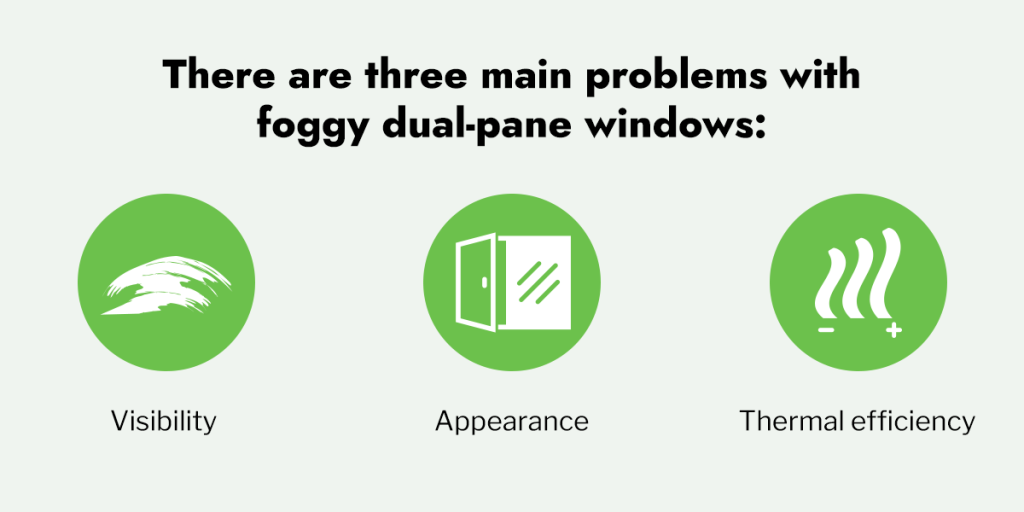
There are three main problems with foggy dual-pane windows:
Quality windows are a significant investment. If you don’t mind the broken seals, especially if you live in a temperate region, you can probably live with the occasional condensation.
The best solution for foggy dual-pane windows is to get replacement windows. While you can try to repair a window with broken seals, doing so does not restore its energy-efficient properties. The results are often temporary, and it might also be very expensive.
If just one of your windows has developed this problem, get it replaced by a qualified window repair person. If more than one of your windows has become foggy, this is a problem that you may keep experiencing. If this is the case, window replacement may be needed in the future. Dealing with one window repair at a time as your window seals fail could become expensive and time-consuming.
Have your windows assessed by a qualified window dealer and installer. Your window dealer will be able to assess the condition of your windows and give you a quote for replacement.
Installing high-quality dual-pane windows with a warranty against seal failure can prevent this problem. The stronger the seal, the better your windows will fare over time.
You don’t have to live with foggy, inefficient windows. Renewal by Andersen® windows withstand the test of time and have the best warranty in the business. Protect your windows for decades after installation with our fully transferable, 20-year warranty that covers glass and our exclusive Fibrex® material.
Contact Renewal by Andersen to schedule a consultation and learn more about installing new windows.