

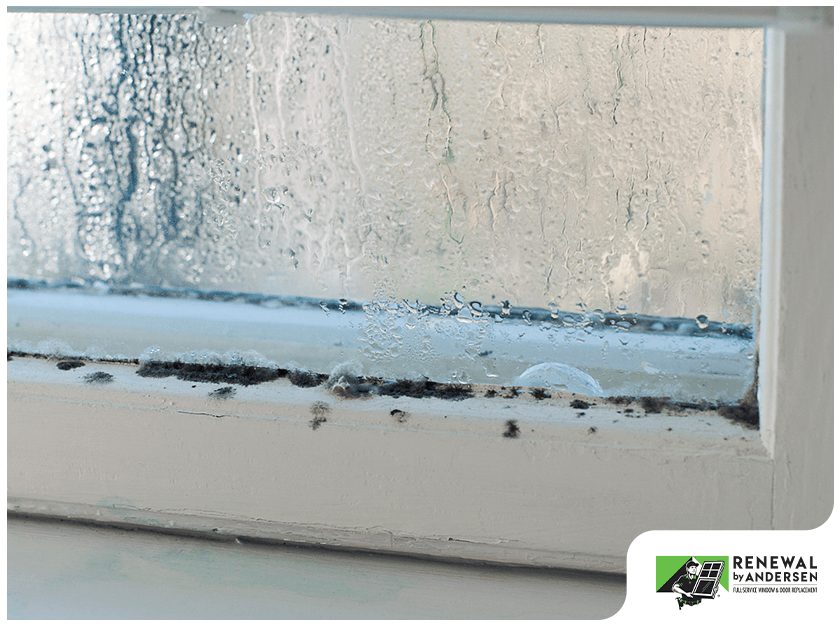
Mold growth can pose serious challenges in a home, from allergies and respiratory illnesses to compromised aesthetic appeal. Window sills are one of the more common places it can form. Condensation may develop along the inside of the window in winter and the outside in summer, leading to a buildup of moisture that’s ideal for mold to grow.
Learn more about why it happens and how to keep mold off window sills.
Mold growth on window sills occurs when moisture builds up in humid areas, leading to condensation. As moisture gathers, it wicks into the sill, creating a fertile ground for mold growth. Blinds, drapes or curtains may exacerbate the issue by hiding mold from sight.
At this point, you’re likely considering two questions – how to prevent mold on window sills and how to remove it. While both are pivotal, prevention is better than a cure.
In the following sections, we’ll discuss both topics and give you the details you need to control and prevent mold growth.
Removing mold may become necessary when moisture has built up over an extended period without intervention. Certain molds, like black mold, may be toxic to humans. These are two of the best options for removing mold.
You can often remove mold from window sills with a simple bleach solution. It’s generally more effective than standard window cleaners. You can use it effectively by following these simple steps:
Bleach kills most mold and bacteria, helping to prevent the problem from returning.
If you have wooden window sills, sanding off the mold growth may be your best option. Wear a respiratory mask and use coarse-grit sandpaper on the sill until you no longer see streaks of mold growth.
Continue until you have successfully removed the upper layer of the whole sill, not just the part with the mold growth. If you only sand the areas with mold, the sill may appear uneven or have sunken and raised areas.
Instead, sand the whole sill evenly to create a uniform appearance. Next, use fine-grit sandpaper to smooth the sill out again. Finally, prime the sill and paint it to restore its appearance or give it a new look.
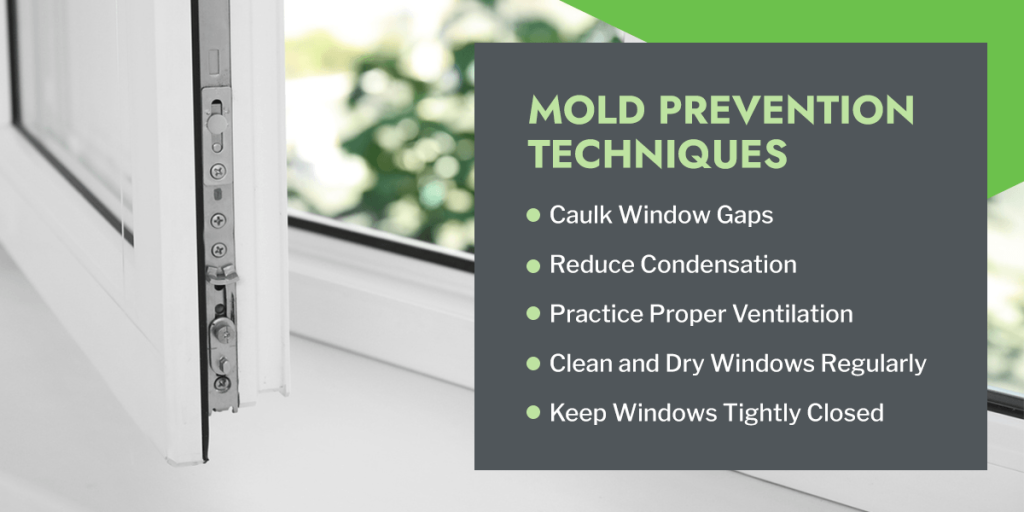
Now we’ll discuss a few mold-prevention techniques to help keep your sills clean and healthy.
Air and moisture leaks around your windows may cause or exacerbate mold growth. To prevent this, caulk window edges and seals as required to avoid air leakage.
Inspect the area where the sash and the glass meet, looking for loose glass or missing caulk, then apply a new layer of caulk as needed. You can choose between a caulk gun or rope caulk, which you can press into gaps with your fingers.
If the leaks are bad enough, consider investing in new windows that seal well and prevent leakage. If you see mold on the window sashes rather than just the sills, it’s time to upgrade your window. Our patented Fibrex® material offers excellent durability and resists mold and moisture damage.
Predictive models link moisture and mold growth. Condensation is a leading cause of mold on window sills, especially during the winter when indoor humidity is high. You can reduce humidity and condensation by:
Sufficient ventilation is essential to avoiding mold growth. Here are a few things you can do to keep ventilation within an optimal range:
One of the best ways to prevent mold growth is to clean and dry the window sills regularly. Mold requires two things to thrive – moisture and organic matter.
Drying the sill and the surrounding area regularly prevents moisture from building up. Cleanliness is the other key. Wipe the sill down after closing the windows to remove mold spores that may have blown in on the wind.
Vacuuming regularly using the wand attachment will help keep the sill clean of dust and debris, removing organic matter that can encourage mold growth.
During storms and periods of high humidity, close your windows firmly and lock them in place. This simple step can prevent rain from seeping through gaps in the frame and lower the humidity exchange between the indoors and outdoors.
As stated above, there’s a definite link between mold and condensation. However, a complete absence of window condensation may be a cause for concern.
An absence of condensation means less risk of mold, but it also means your windows aren’t thermally efficient. In simple terms, your home is heating with the outdoors in summer, and the warmth you generate indoors is dissipating in the winter.
While some people claim that energy-efficient windows reduce condensation and the possibility of mold, the reverse is true. A truly energy-efficient window will generally maintain one cool side, which means condensation is more likely to occur.
The best solution in this instance is to replace your window with a newer, more trustworthy solution that keeps your home warm in winter and cold in summer. You’ll still need to practice the condensation reduction techniques listed earlier, but you won’t have to deal with additional leaks around window frames, and it will empower you to practice good ventilation.
Removing mold from your home is key to keeping your family healthy. That means controlling moisture, practicing good ventilation and keeping windows clean.
Old windows can be leaky and may not offer your home the best temperature control. If you notice condensation between glass panes, see pools of moisture around your windows after rain or notice that your window never condenses, it’s a sure sign that it’s time for an upgrade.
Contact Renewal by Andersen, your local window specialist, to discuss replacement windows that seal properly and offer excellent moisture protection to help you combat mold and keep your home comfortable.