
It can be tempting to walk into a home improvement store and pick up a stock window to save money on your next replacement project. Unfortunately, that shortcut rarely works out. Standard window sizes don’t really exist for replacement projects, especially in older homes where years of settling and shifting can leave frames out of square, out of level or warped beyond what a stock size can fit.
Specialty replacement windows can help with this problem, as they’re sized to fit your home’s openings for a precise seal that prevents drafts and energy loss. They also include unique architectural shapes like circles, arches and triangles that can bring character to your space.
The short answer is no, at least not for replacement projects. While the window industry does produce catalog sizes that are commonly used in new construction, calling them “standard” is misleading. Standard window sizes vary widely based on when your home was built and which rooms they’re in. For instance, bedroom windows are typically larger than kitchen windows, and building practices from the 1970s differ dramatically from those used in the 1990s or today.
The bigger issue is that older homes settle over time. Foundations shift, framing timbers dry out or expand, and even the most carefully built home can have window frames that are no longer perfectly square, level or plumb after a few years. A window opening that measured exactly 36 inches wide when your home was new might now be just under 36 inches at the top and over 36 inches at the bottom. That barely noticeable variation means your “standard” replacement window won’t fit without some modifications.
You can probably force it, but you’ll end up with gaps, improper seals and performance problems that defeat the entire purpose of replacing your windows in the first place.
That seemingly affordable stock window can get expensive pretty quickly. The main limitation is something called a nailing fin – a flange that extends from the window frame and is designed to be nailed directly to the wall studs before siding goes on. Stock windows come with these nailing fins because they’re built for new construction, not replacements.
Installing a stock window with a nailing fin means tearing out your existing exterior siding around each window opening to access the studs. You’ll also need to remove and replace interior trim and potentially cut into drywall. Once the window is in, you have to patch everything back together, causing unnecessary work and possible headaches.
Matching new vinyl siding to old panels is nearly impossible. Vinyl fades unevenly over time, and even if you find the same product line, the color won’t match what’s been weathered for years. Patching brick or stucco leaves visible seams that often stand out, no matter how skilled you are. Wood siding might match better, but you’re likely still looking at carpentry work and a full exterior paint job to hide the repairs.
The money you saved on the window itself instead gets consumed by unnecessary labor costs, materials and the time parts of your home spend unusable during installation. What looked like savings per window now turned into extra expenses when you factor in the additional work required to make it look and fit properly.
Specialty replacement windows are designed specifically for retrofit installations. They’re built without nailing fins, which means they slide directly into your existing window frame without disturbing your siding or interior walls. Professional installers can complete the job cleanly and quickly, typically in a single day for most homes.
These windows are sized to match your exact openings, ensuring a tight seal that prevents air leaks, water infiltration and energy loss. The precision fit avoids drafts that can sneak through or open spots where moisture often causes rot and mold over time. This can potentially lead to lower energy bills and a more comfortable living space year-round.
Choosing a custom manufacturing process includes precise measurements and production, where each window is built to your specifications using durable composite materials. You’ll get a product that fits perfectly and performs reliably. A streamlined installation process with expert help minimizes disruption to your daily routine and eliminates the mess and stress that come with tearing into walls and siding.
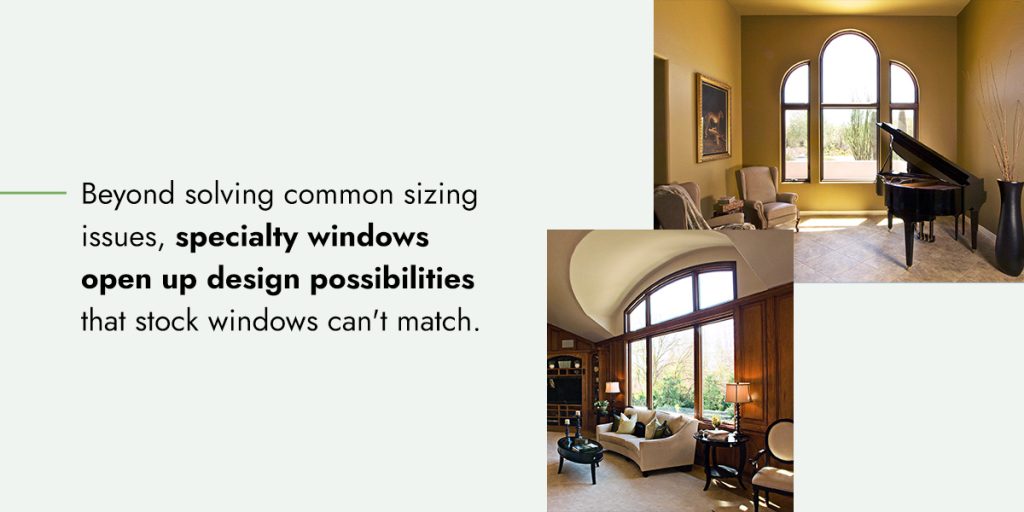
Beyond solving common sizing issues, specialty windows open up design possibilities that stock windows can’t match. If you want to add architectural touches or match a specific style, specialty window sizes go well beyond standard rectangles. Some available shapes include:
These unique shapes let you match your home’s original architectural character or create an entirely new look. They’re particularly valuable in historic renovations where maintaining period-correct details matters, or in custom homes where distinctive design elements set your property apart.
An important note is that most specialty-shaped windows and picture windows are fixed units, meaning they don’t open. They’re designed to maximize views and natural light rather than provide ventilation. If airflow is important for a particular location, you can combine specialty shapes with operable windows nearby to get both the aesthetic you want and the function you need.
Getting accurate measurements for your windows is more complex than it might seem. Your windows must be measured at three points — on the edges and in the middle. Standard replacement windows require at least 3 ¼ inches of depth, and anything less means you’ll need custom solutions or structural modifications. When a window is the wrong size, it can cause cracks in the glass, energy leaks around the frame or installation failures where your windows simply won’t fit. Even a ¼ inch can mean the difference between a perfect seal and ongoing efficiency problems.
That’s why working with experienced professionals matters. A specialized consultant can assess your specific layout, take precise measurements and recommend solutions that work for your home’s unique characteristics. A detailed installation process ensures your windows will perform as expected for decades to come, backed by warranty coverage that protects your investment.
When you’re ready to get the right fit for your home’s windows, the team at Renewal by Andersen® can provide a free in-home consultation. Design consultants will measure your windows and walk you through custom solutions built for your specific needs. You’ll work with the same team from start to finish, from the initial consult and measurement through manufacturing and installation, so your windows deliver the performance, efficiency and look you’re counting on. Get started with your free consultation today.