
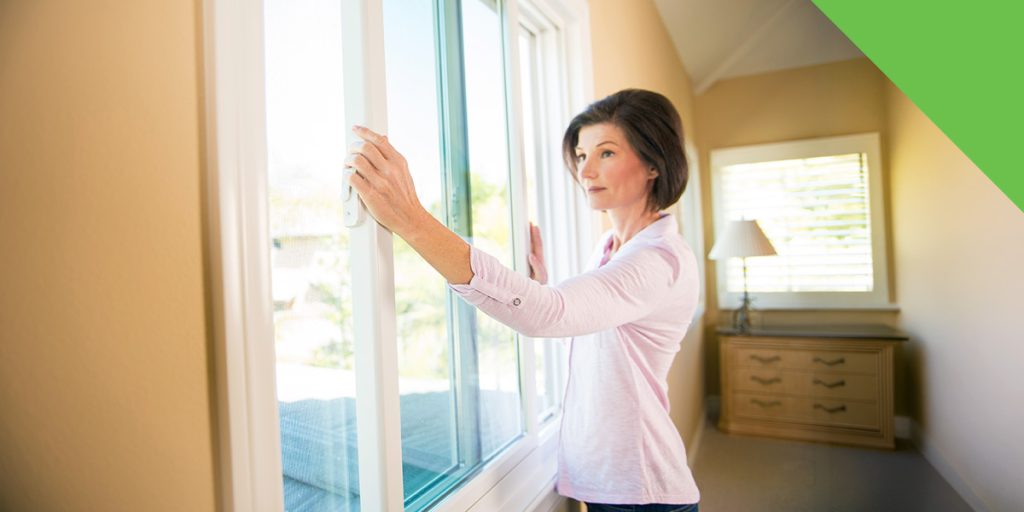
Understanding the condition of your windows helps you maintain a comfortable, energy-efficient home. Some issues are easy to repair, while others signal it’s time for replacement. This guide walks you through the most common kinds of damage your windows can sustain, so you can identify what you’re seeing and make informed decisions about care and maintenance.
Before diving into the different types of damage, it’s helpful to understand what causes them in the first place. Here are three common culprits:
The following damage types represent the most common issues homeowners encounter:
Discoloration shows up as fading or color changes on window frames, sashes and even the glass itself. When you notice yellowing or paint losing its original color, you’re seeing the visible effects of long-term ultraviolet (UV) exposure. This goes beyond aesthetics because the same sun damage that changes color also makes the material more brittle over time. Moisture intrusion creates different patterns, typically appearing as dark spots or streaks around frame edges where water has penetrated.
Surface scratches on glass usually only affect how your windows look without compromising structural integrity. Deeper etches tell a different story because they actually penetrate the glass and create weak points.
Wind-blown sand and dirt cause many of these deeper marks as particles repeatedly strike the glass during storms. Harsh cleaning materials can also cause etching over time. If you run your fingernail across the scratch and it catches in the groove, you might want to have a professional take a closer look at the extent of the damage.
Dents in vinyl or aluminum frames typically come from direct impact. While they might seem like minor visual flaws, they can actually affect how well your window seals. Warping, bowing or twisting also leaves gaps around the edges of a window. When frames develop these types of distortions, conditioned air can escape and cause your utility bill to rise. According to the Department of Energy, leakage accounts for 25% to 30% of a home’s heating and cooling energy use.
A broken window leaves your home completely exposed to the weather and creates safety concerns from sharp glass fragments. Storm impacts, accidental collisions and attempted break-ins can all cause shattering. Boarding can secure the opening in the short term, but you should arrange professional window replacement as quickly as possible.
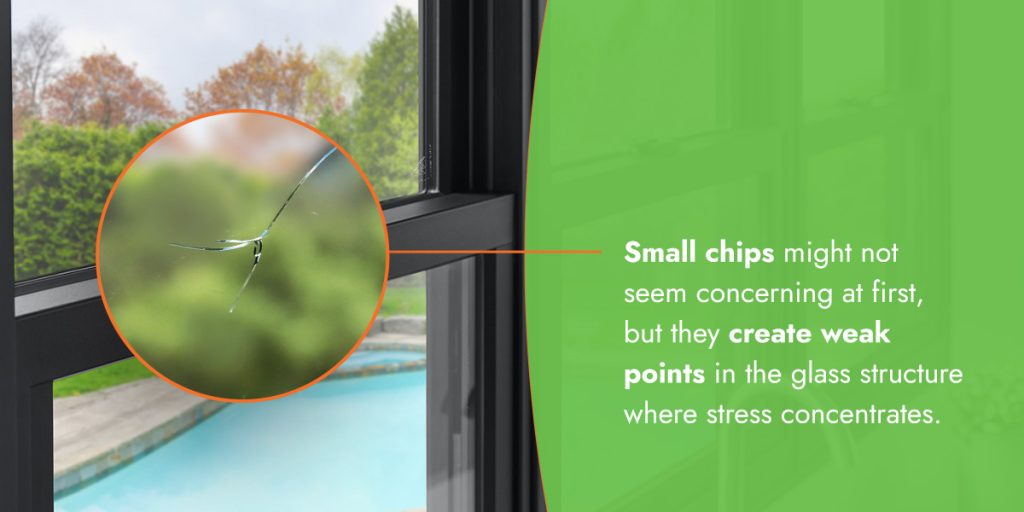
Small chips might not seem concerning at first, but they create weak points in the glass structure where stress concentrates. Temperature changes cause the glass around the chip to expand and contract, which gradually spreads the damage outward into a crack. Stress cracks can also form without any visible impact. They typically start at window edges and work their way inward. Once a crack begins, it continues growing with each temperature cycle your window experiences.
Screens, seals and sashes fail in different ways:
Loose hardware creates security vulnerabilities and operational issues that affect your daily comfort. When a lock is wobbly, it’s easier for someone to force the window open from outside. Meanwhile, insecure hinges make windows difficult or impossible to use. A frame that rocks, shifts or shows visible gaps indicates problems with the original installation or deterioration in the structural support.
Over time, caulk dries out or pulls away from surfaces, creating small openings where water can enter your home. Cold temperatures also cause caulk to contract and crack, while ice formation can completely break the barrier. Therefore, checking your windows twice a year helps you stay ahead of caulking problems:
If you need repairs during winter months, choose silicone or rubber-based products that cure in freezing conditions rather than latex formulas that won’t set properly. Use a hair dryer to ensure the area you are applying caulk to is dry and free of ice. It’s best to recaulk on a sunny afternoon, as your house will have warmed up slightly. For an additional layer of protection, you can also install storm windows.
Wood rot develops when moisture penetrates finishes and saturates the underlying material, starting as a small, soft spot that spreads throughout the frame as long as water remains present. Rust appears on metal components, like hinges, locks and frame reinforcements, once coatings break down and expose bare metal to moisture. Both conditions represent serious structural decay. That’s why replacing damaged frames and sills ranks as the top reason homeowners invest in new windows.
If you encounter any of the types of window damage above, should you consider window repair or window replacement? This table can help you decide:
| Consider repair when: | Consider replacement when: |
| One lock is broken, but the rest of the window works fine | Multiple components are failing at the same time |
| You notice small gaps around the frame that need sealing | You discover rot spreading through wood frames |
| A single pane has a small chip from impact | Fog or condensation appears between glass panes |
| Caulking around frames has worn and needs reapplication | Windows have warped and no longer close properly |
| Hardware has loosened and needs tightening | Your heating and cooling bills keep increasing |
| This is the first issue you’ve had with this window | You’ve called for repairs on the same window multiple times |
| The window still seals and insulates effectively | The repair estimate approaches the cost of new windows |
Now that you can identify different types of window damage, a professional assessment is the next step to confirm what you’ve found and determine the best solution.
Renewal by Andersen offers free, no-obligation consultations to evaluate your window damage and recommend the right path forward. Contact us to get the answers you need and help your windows perform reliably for as long as possible.