
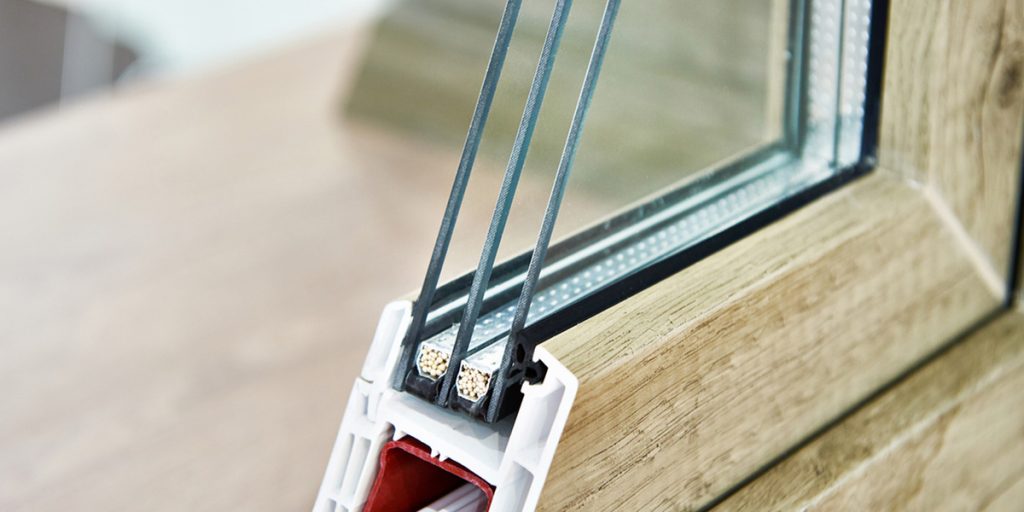
Good-quality windows are more than just frames and glass panes. A window’s efficiency is affected by the type of seal, coating and gas fill used in their construction.
You don’t see it, but an insulating gas is the invisible hero behind energy-efficient windows. Instead of leaving the gap between the panels of your double-pane unit empty, Argon, among others, is widely used to minimize thermal transfer.
Argon-filled windows offer significant benefits, including reduced heat transfer, better insulation, sound dampening and reduced condensation. Let’s discuss the history of gas fills, and why Argon is used in windows.
Argon has unique qualities when used in window replacement, including:
Like other insulating materials, Argon forms a thermal barrier to keep heat in the room. However, thanks to its higher density and slower movement, argon creates a more efficient thermal barrier. It minimizes heat loss by reducing convection. The percentage of gas present makes a significant difference.
Since Krypton is denser than Argon, many argue that the former makes a better insulating gas fill. While this is true, Krypton is far costlier than Argon. Considering that Krypton is marginally more efficient than Argon, its slightly superior performance wouldn’t justify its higher price.
Renewal by Andersen uses an Argon gas blend to balance energy efficiency and cost. This way, we minimize our expenses in producing replacement windows without necessarily skimping on quality. In turn, we pass down the savings to our customers.
Insulated windows with an Argon gas fill are less prone to condensation, especially in high-humidity areas like bathrooms and kitchens. Although misting on the glass’s outer surface could indicate good energy efficiency, this moisture buildup could lead to water damage.
Argon-filled windows are unique in that the window’s outer edges and center remain above the point of moisture saturation, commonly known as the dew point, which prevents sweating.
Argon wasn’t the first thermally efficient gas used for fill. When they first introduced double glazing, manufacturers used ordinary air between the glass panes. In the ’70s, some manufacturers utilized carbon dioxide and Freon. Unfortunately, these gases have side effects. Oxygen causes window materials to deteriorate over time, while carbon dioxide and Freon easily precipitate discoloration and are sensitive to seal failure.
Conversely, replacement windows using Argon develop no structural and cosmetic problems. Trapped using our precise dual sealing process, the odds of having window seal failure are minuscule to keep Argon where it should be.
Renewal by Andersen® windows are filled with an Argon gas blend that is nontoxic, odorless and colorless. This blend won’t affect how your windows look and end up ruining your home’s overall design. With gas filling just the right amount of space between your glass panes, your windows can function more efficiently and help you save energy in the long run.
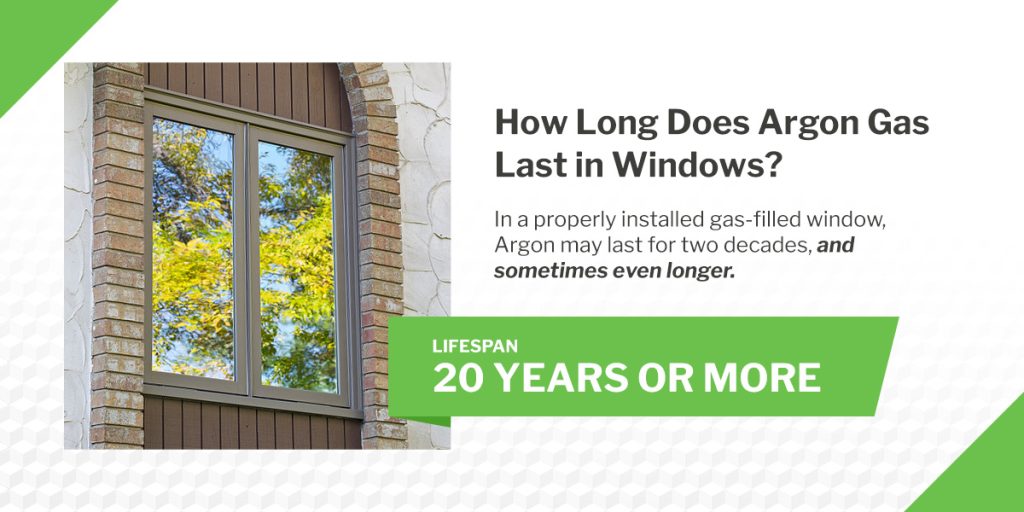
In a properly installed gas-filled window, Argon may last for two decades, and sometimes even longer. Ensuring that the windows are properly maintained is essential to extending the gas’s lifespan.
Before the 1950s, manufacturers hadn’t filled windows with gas yet. However, they soon discovered that gas-filled windows, also known as insulated glass units (IGUs) offer significant benefits:
While gas-filled windows offer significant advantages, there are some potential concerns to consider. These include:
To avoid these issues, having your window installation overseen only by a certified window company has become essential. You also need to choose an appropriate gas for your IGUs. Argon is one of the leading choices, and offers significant advantages.
Choosing the right installer is paramount to the overall lifespan of your windows. Argon-filled windows are an excellent option, but need the experienced touch of a trustworthy installation team.
Our team of expert installers is ready to help you make the shift from normal windows to Argon-filled double-glazed windows. Renewal by Andersen can help you improve your home, while offering benefits like:
Our windows are manufactured for beauty, durability and energy efficiency. Call today or fill out our form to request an estimate.