
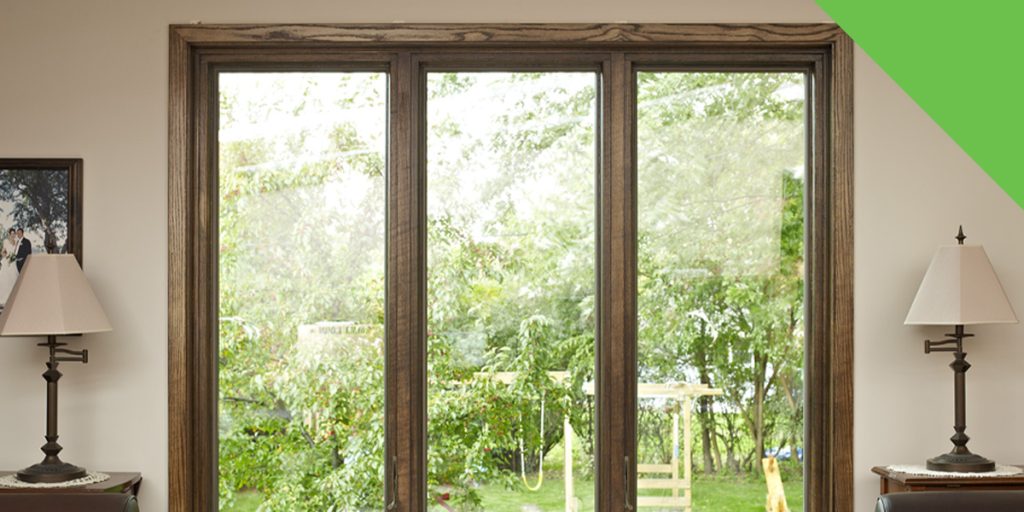
Well-built windows are more than architectural elements. They provide your home with aesthetic and functional value. They let light and air into your house, providing a view to the outside world and protection from the elements. To keep windows functional and beautiful, they need care and maintenance. If your windows are buckling, warping or bowing, you’ll need to repair them or find a replacement with more resistance to warping causes.
Warping mostly happens to vinyl and wood window frames. It can dramatically affect the energy efficiency and diminish the curb appeal of your home if left untreated for too long. To solve this problem, you need to understand the forms of warping, what causes it, how to fix it and solutions to prevent it from happening again.
Window warping distorts a window frame through environmental conditions and age-related causes. This condition affects a home’s energy efficiency and electricity costs and causes insulation issues. The bending of the frame creates small spaces that let out warm or cool air and let in outside weather. It is typically caused by the effects of heat buildup or dampness.
Be on the lookout for these common forms of window warping:
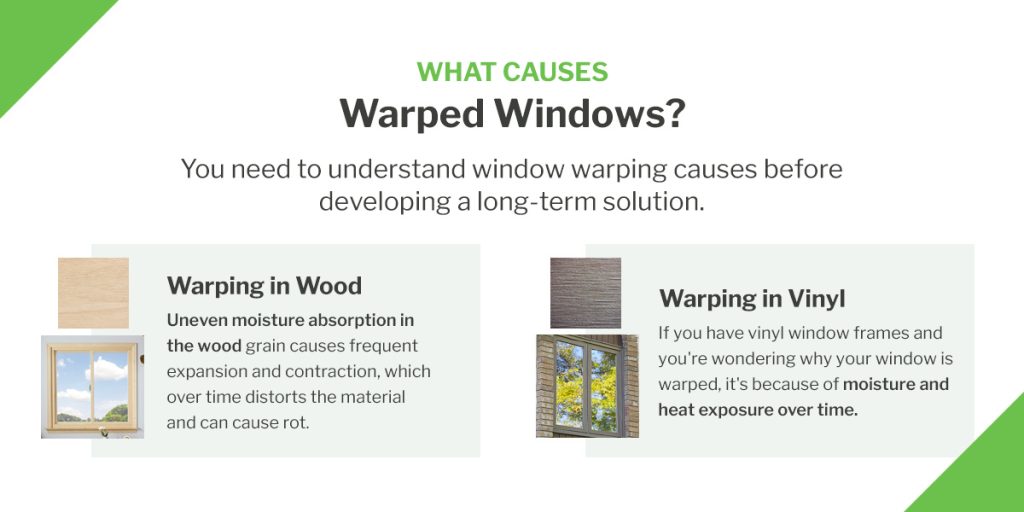
You need to understand window warping causes before developing a long-term solution. Two of the most glaring reasons behind warping are moisture and heat.
Uneven moisture absorption in the wood grain causes frequent expansion and contraction, which over time distorts the material and can cause rot. Wood naturally retains some moisture, causing buckling and swelling of the frame when there are wet conditions outside. The longer the wood retains this moisture, the more permanent the damage becomes. In wet weather conditions that may last for weeks, wood becomes more vulnerable.
Other factors that affect the speed and severity of warping include grain direction, any finishing and veneers an installer applies, sunlight, airflow, wind direction, humidity, and temperature changes. Even in the most temperate conditions, if there is consistent moisture exposure, windows will show signs of warping over time.
Vinyl is popular for homeowners because it needs minimal maintenance and offers solid energy efficiency. However, it is vulnerable to twisting, warping and bowing for a different reason than wood. Its shape and rigidity are greatly affected by constant and prolonged exposure to high heat during the summer. So if you have wood or vinyl window frames and you’re wondering why your window is warped, it’s because of moisture and heat exposure over time.
Discoloration can also occur in vinyl over time, which impacts the window’s appearance but doesn’t affect its functionality. You may have a warranty so that you can get a replacement. However, many companies have maintenance and mishandling rules attached, which would void it.
It’s normal for a window to experience a range of weather conditions during its lifespan. From hot summers to snowy winters and rainy springs, these moisture-laden times are often the culprit for exterior issues like window frame deformation. If homeowners leave this damage untreated, it only worsens quickly as the gaps allow more dampness, further saturating the material until it’s noticeable from the sidewalk.
A warped window also affects more than just its appearance. Warping creates minuscule gaps between the window sash and frame. These openings can let treated air escape and allow outside temperatures to trickle into your home. If this is the case, your heating and cooling systems will have a hard time reaching your desired temperature indoors, prompting you to spend a boatload of cash on your energy bills while attempting to remain comfortable.
Window warping can also make it difficult to operate your windows daily. Sticking is a common phenomenon in substandard windows. It occurs when they become so deformed that they no longer fit within the frame.
It is clear that distortion—whether mild or severe—in windows is a real problem that must be treated immediately. You can either perform repairs or a full-on replacement to fix warped windows. Here is a brief breakdown of these options to help you select the best solution for your home and warped window:
Patching up your warped windows may temporarily solve the issue, but it should not be treated as an end-all and be-all response. You still need to find a long-term solution to completely eradicate the problem in the future.
So, let’s look at how to fix warped windows. The first step you should take is to loosen the hinges. Since warped windows do not quite fit within the opening of the building, adjusting their tightness can help solve the problem and make them operate more smoothly.
Another solution is to fill the gaps around the warped windows with additional weatherstripping. The main goal of weatherstripping is to stave off water and moisture and prevent them from infiltrating the interior space. To do this, you need to examine the seal and search for the location of gaps along the window. Once you have discovered them, open the window unit and cut the new weatherstripping material to fill those gaps where there are air leaks. Be sure to seal it after.
Replacing warped windows. The best solution is to eliminate warped windows and install new, energy-efficient traditional or optimally customized specialty windows. It is important to eliminate the problem and ensure your windows are properly fitted and in good condition. Getting new replacement windows is also a surefire way to enhance the exterior appearance and improve your home’s energy efficiency.
Since wood windows are susceptible to warping and rotting, they can let in more moisture, attract termites and encourage the growth of mold and mildew.
If you want a real long-term solution, use windows made with Fibrex® composite material. These high-performance, energy-efficient windows utilize a unique blend of reclaimed wood fiber and thermoplastic polymer, outperforming wood and vinyl windows. The main advantages of Fibrex® material are:
Windows made from Fibrex® material are an excellent replacement solution. Also, it serves as a preventive measure so you can rest easy knowing you don’t have to worry about warping, rotting or temperature damage again.
Breathe new life into your home with Renewal by Andersen® windows made from Fibrex® material. Keep yourself covered with our industry-leading warranty covering materials, labor and installation, without the maintenance and mishandling exceptions. We are a premier source of energy-efficient and stylish replacement windows and patio doors in Ohio. Our top-rated professionals are committed to providing the comfort and efficiency every client needs through industry-leading products and services.
Call us today at 866-609-5033 or fill out our contact form to set up an appointment or request a free, no-obligation estimate for a window replacement.