
Wood and vinyl are classic building materials, and window manufacturers have used them for hundreds of years to make window frames. Though they’re still a common enough window material, wood and vinyl have significant drawbacks.
Unlike most window replacement companies, Renewal by Andersen exclusively installs windows made from Fibrex® material, a product that’s stronger than vinyl and lower-maintenance than wood. The durability, longevity and easy maintenance of Fibrex® material make Renewal by Andersen® replacement windows the preferred product for many homeowners. But, is Fibrex® material better than wood and vinyl?
Fibrex® material is a patented composite material perfected by Andersen in 1992. It’s made from 40% reclaimed wood fiber and 60% thermoplastic polymer. This combination creates a durable, eco-friendly material that offers the strength of wood with the low-maintenance benefits of vinyl. Window frames made using this material maintain their shape and structure over time — even in extreme temperatures — because this material is twice as strong as vinyl.
When compared to other competitor painted vinyl window products, Fibrex® material was found to be 12 times thicker and more scratch-resistant. It can also be combined with Renewal by Andersen’s High-Performance™ Low-E4® glass packages for better energy efficiency and overall performance.
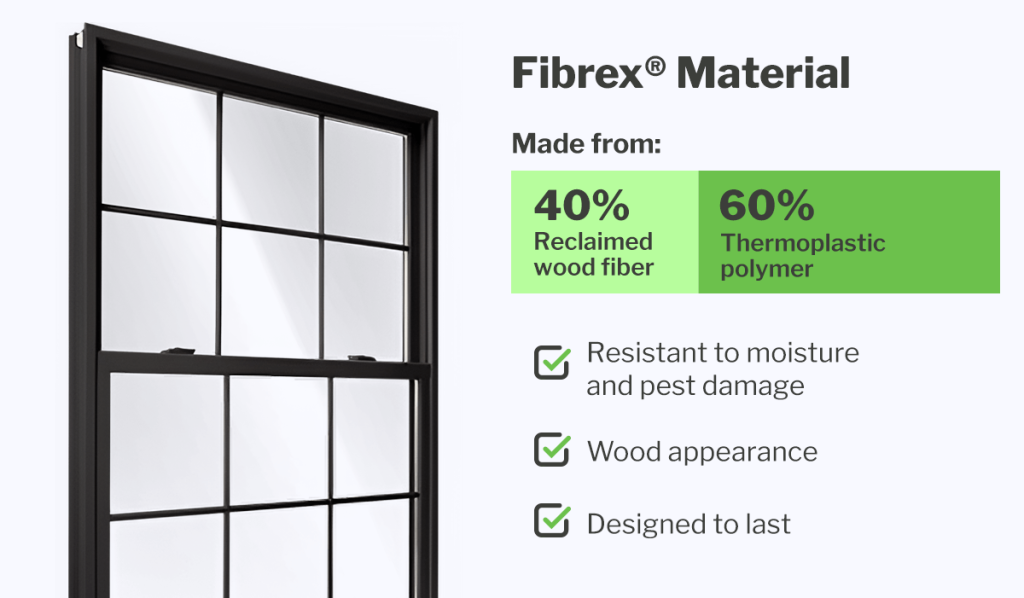
Here’s how window frames made using Fibrex® material compare to natural wood and vinyl frames:
Wood is vulnerable to damage from pests and moisture, so windows made with natural wood frames need regular maintenance. You must have a plan to scrape, sand, re-caulk and repaint them at least every five years to protect the wood from potential moisture damage.
Vinyl and Fibrex® material are more resistant to moisture and pest damage, so you don’t need to seal, repaint or protect them from moisture. Occasional cleaning with mild soap and water to remove dirt and dust is all the maintenance needed.
Wood windows are among the most aesthetically pleasing options you can select for your home. Their grains add visual interest that many homeowners appreciate when used with a clear finish. You can also paint over the grain if you still want to experience the benefits of real wood windows but want a pop of color to complement your home decor and style.
However, as stunning as natural wood can be, windows made with Fibrex® material look a lot like wood, so it can be hard to tell the difference. Fibrex® material also offers greater customization options. It can be prefinished in one of Renewal by Andersen’s many color options and never needs to be repainted — unless you choose to change the color. Our windows also come in a wide variety of styles, including double-hung, single-hung, casement, awning, picture and specialty shapes.
In contrast, vinyl is made from a synthetic plastic material, which gives it a plastic-like appearance. Although vinyl window frames come in various colors and finishes, they cannot mimic the look of natural wood and tend to fade over time with exposure to the extreme conditions outdoors.
Wood windows are very durable as long as they’re properly maintained, but those that aren’t regularly painted and sealed can deteriorate fast. If you’re not willing to keep up with all the maintenance natural wood windows require, you’ll soon be getting them repaired or even replaced.
Fibrex® material and vinyl are also durable because they do not deteriorate when exposed to moisture and are resistant to pests. However, the biggest difference is that vinyl distorts when exposed to high temperatures, causing it to lose its structural stability. Fibrex® material holds its shape even during harsh summer heat or freezing winters.
While wood windows can last for decades with consistent upkeep, this requires scraping, repainting and sealing every few years. Signs of failure, such as peeling paint or bubbling, signal that maintenance is overdue.
Vinyl windows typically last around 20 to 30 years, depending on the quality of the material and how well they’re installed. They don’t rot like wood, and they resist damage from moisture and pests. However, vinyl can weaken over time when exposed to extreme heat or strong sunlight. This can cause the frames to warp, crack or fade, which may affect how well the windows work and how they look.
Fibrex® material is designed to last. To find out just how long it lasts, Renewal by Andersen recently removed a number of windows from an actual Minnesota installation from over 20 years ago. After 20 years of living in real-world conditions of brutal winters and hot, humid summers, Renewal by Andersen put them through a battery of performance tests (per ASTM E2068) and found they still operated as easily as the day they were installed. The Fibrex® material stayed strong — it didn’t crack, pit, corrode or rot.
Natural wood window frames may be beautiful, but windows made with Fibrex® material are just as beautiful and much easier to maintain. Renewal by Andersen backs all of its replacement windows with the nation’s best warranty coverage because it has confidence in the products and knows that Fibrex material is durable.
Call us today to make an appointment and learn more about how you can get the highest quality windows in your home. Call our toll-free number at 866-609-5033 or fill out the short form on this page.