

Spotting a water stain near your window can cause alarm. Beyond being an eyesore, water stains can signal a serious underlying issue. They tell a story about what’s happening in your home. From rain sneaking in to hidden leaks, identifying the cause of the stain should be your top priority.
This guide is here to help. Understand the source of water stains around your windows and how to fix them.
Water marks around windows often stem from condensation, leaks or outside moisture. Knowing which one you’re dealing with can help you address the problem:
Condensation is the most common culprit for moisture near windows. It occurs when water vapor in the air cools and transforms into water droplets. If warm, humid air meets the cold glass surface, water droplets form on the glass and may settle on the sill or frame. Over time, the moisture can create faint marks or discoloration.
Windows in high-humidity rooms are more likely to experience condensation. You may notice these stains in kitchens, bathrooms or laundry rooms. The marks may appear darker along the corners of the sash or on the lower edge of the window frame.
If this happens often, you may need to improve ventilation or adjust humidity control.
While condensation originates from within, leaks often bring water from outside. A failing seal or improper insulation can allow rainwater to sneak in. Water stains from leaks usually appear in the corners of the frame or on the wall below the window.
Other signs of a leaking window include:
Sometimes, the reason is simpler. Leaving a window open during a rain shower can let water settle on the sill. Poor exterior drainage or damaged siding can also redirect rainwater toward the frame. Even clogged gutters can cause water to back up, creating blotches around windows. A hidden plumbing leak behind the walls could also cause damp spots near windows. Locating these leaks often requires the services of a plumber.
Identifying the source of water stains requires some detective work. Follow these steps to find the cause of the problem before deciding on a solution:
Start by observing where the water appears. Moisture on the inside of the window pane signals condensation. If you see water between the panes, that suggests a broken seal within a double- or triple-pane window. Water on the frame or wall surface often means a leak.
Paying attention to where the moisture forms gives you the first clue.
Run your hand around the edges of a closed, locked window. Any air movement indicates a weak seal, insufficient insulation or worn weatherstripping. Look at the caulk lines. Are they cracked, brittle or pulling away from the frame? Air and moisture may be slipping through the gaps. These small details can reveal a much bigger problem.
Step outside on a dry day and examine the exterior frame. Check for cracked paint, peeling caulk or soft spots in wood frames or sills. Press on the surface. If it feels spongy, moisture has likely infiltrated the frame.
Metal or composite frames may show signs of corrosion or separation at the joints.
Think about when the water stains appear – do they show after heavy rain or high winds? Stains after storms or rainfall suggest intrusion from the outside. Constant dampness indicates high humidity levels inside your home.
Recognizing these patterns helps you decide on a DIY or professional solution.
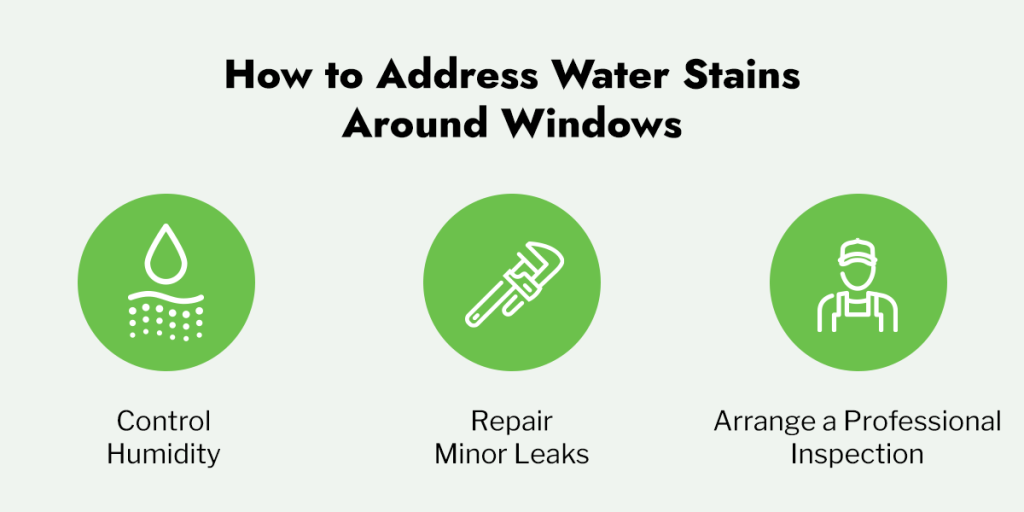
Once you identify the cause, you can take steps to fix the issue and protect your home from further damage.
Condensation problems often start with indoor humidity. These small changes may solve the problem:
If you find a small window leak, begin with a straightforward repair. Clean the area to remove old caulk or weatherstripping. Then, apply a fresh bead of exterior-grade material to seal visible gaps. Use caulk on stationary windows, such as picture windows and weatherstripping on operational windows.
Stains that return after sealing signal a more serious issue. Severe leaks in the walls around the windows may need a professional plumber. If the problem comes from your window, it may be time to consider a replacement.
If you can’t find the source of the water stains or discover a major leak, call for professional help. An experienced window contractor can identify the cause and recommend the right solution. They may suggest repairs or replacing your windows. Avoid ignoring the problem, as this can lead to severe, costly damage down the line.
Some signs show that window replacement may be the smart and lasting choice:
When window water stains persist, a reliable replacement makes all the difference. Renewal by Andersen has built a reputation for custom-made replacement windows that last. Each frame is made from our exclusive Fibrex® material. This innovative composite boasts the strength of wood with the resilience of vinyl. It resists the rot and decay that leads to leaks. Enhanced insulation withstands temperature changes without warping or cracking, keeping moisture outside.
Our optional High-Performance™ Low-E4® glass packages help control condensation. They maintain balanced surface temperatures by blocking UV rays and escaping heat. The result is a window that stays clear, efficient and durable year-round.
Protecting your home from water damage starts with windows you can trust. Contact us to schedule a consultation and explore custom replacement windows that suit your style and budget.