
Hard water stains on your windows can be an eyesore, making even a freshly washed pane look dull. If you’ve ever battled these stubborn mineral deposits, you know that a simple glass cleaner might not cut it. This comprehensive guide walks you through proven methods to restore the clarity and sparkle to your glass.
Hard water is tap water that has high levels of dissolved minerals, primarily magnesium and calcium. When this water is left to dry on a surface, such as your window glass, the pure water evaporates but leaves the mineral compounds behind.
This mineral residue forms a chalky, whitish or hazy buildup we call a hard water stain or water spot. The longer these spots remain, especially when exposed to heat and sunlight, the more they bond to the window’s glass surface, making them incredibly difficult to remove with standard cleaning products. They are essentially a form of microscopic scale adhering to the glass. Understanding this process is the first step in learning how to get water spots off glass effectively.
You can try several ways to get water stains off glass.
This is the classic, environmentally friendly and often highly effective solution for mild to moderate water spots. White distilled vinegar contains acetic acid, which is powerful enough to break down mineral deposits yet gentle enough not to harm most glass surfaces. Follow these steps:
Lemon juice is a natural alternative that contains citric acid, a slightly milder acid than vinegar, making it a good choice for lighter stains or when you prefer a more pleasant scent. To use this method, follow these steps:
When acidity alone isn’t enough, a mild abrasive like baking soda can help lift the residue without scratching the glass. This method focuses on getting hard water stains off glass if they have become slightly more entrenched, and involves these steps:
For severe or baked-on mineral deposits that resist home remedies, you may need a specialized hard water stain remover solution. These products are typically more potent and are sold as dedicated mineral deposit removers or rust stain removers.
Look for cleaners specifically labeled for removing calcium, lime and rust. Always ensure the product is safe for use on glass by carefully checking the label. Follow the manufacturer’s directions precisely. These solutions are stronger, so they often require shorter contact times and careful rinsing. For extremely tough spots, you might use a nonscratch nylon scrub pad.
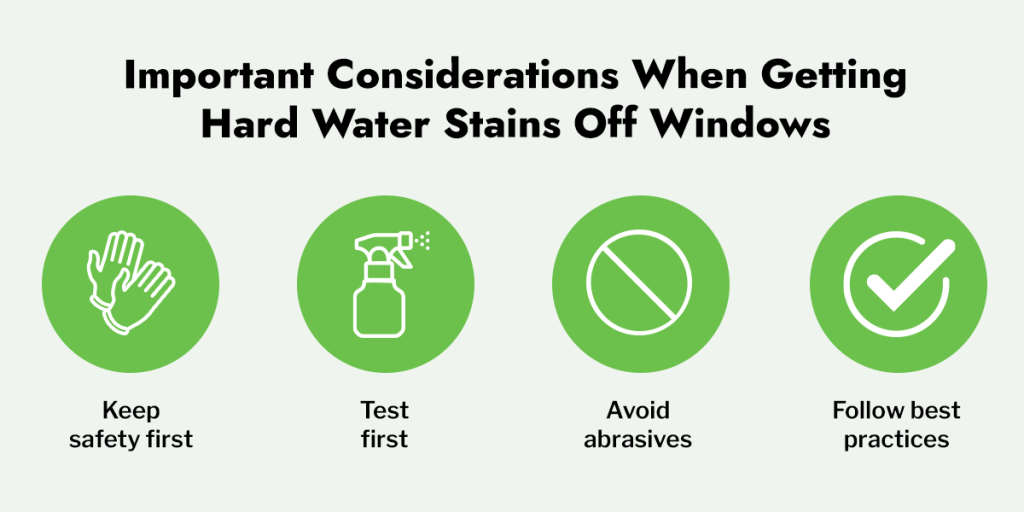
Before you begin any cleaning project, keep these crucial considerations in mind to ensure safety and prevent damage to your windows.
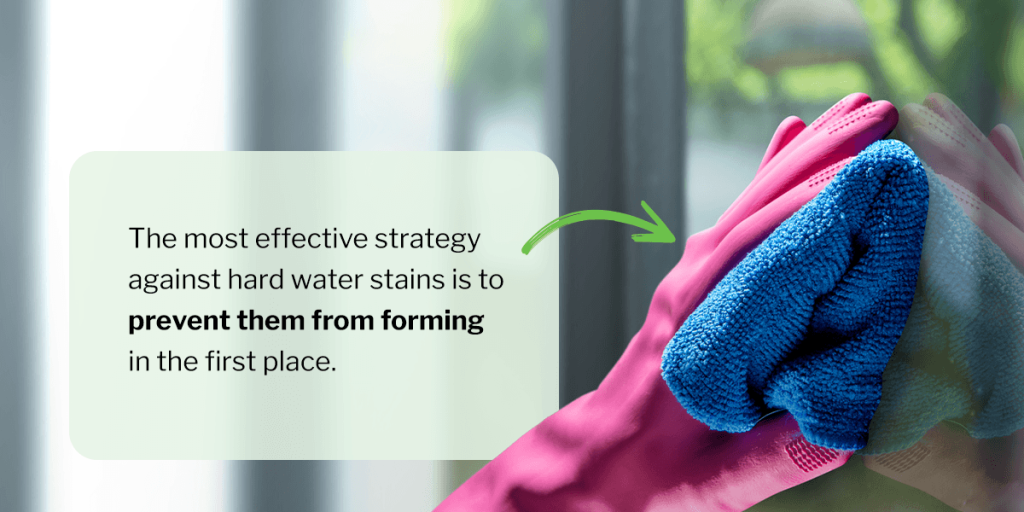
The most effective strategy against hard water stains is to prevent them from forming in the first place. Prevention saves you significant time and effort in the long run and involves:
If you find yourself constantly battling stubborn, recurring hard water stains, it may be a sign that your current windows are aging or lack modern features that make maintenance easier. This is where a long-term solution becomes the most practical choice.
Consider upgrading to high-quality replacement windows from Renewal by Andersen. Our commitment to innovation offers a revolutionary solution to the problem of hard water spots. The Renewal by Andersen® window glass features a “self-cleaning” titanium dioxide exterior coating on its High-Performance™ Low-E4® glass option.
This specialized coating is activated by the sun’s ultraviolet (UV) rays, which break down organic material on the glass. More importantly, the coating is hydrophilic, meaning it causes water to spread out evenly and sheet off the glass rather than beading up and drying in spots. While not entirely maintenance-free, this technology significantly reduces the need for aggressive cleaning, minimizing the buildup of hard water marks and keeping your windows cleaner for longer.
Call us today at 510-214-4134 to learn more about our self-cleaning glass solution and other replacement window options for your home.