

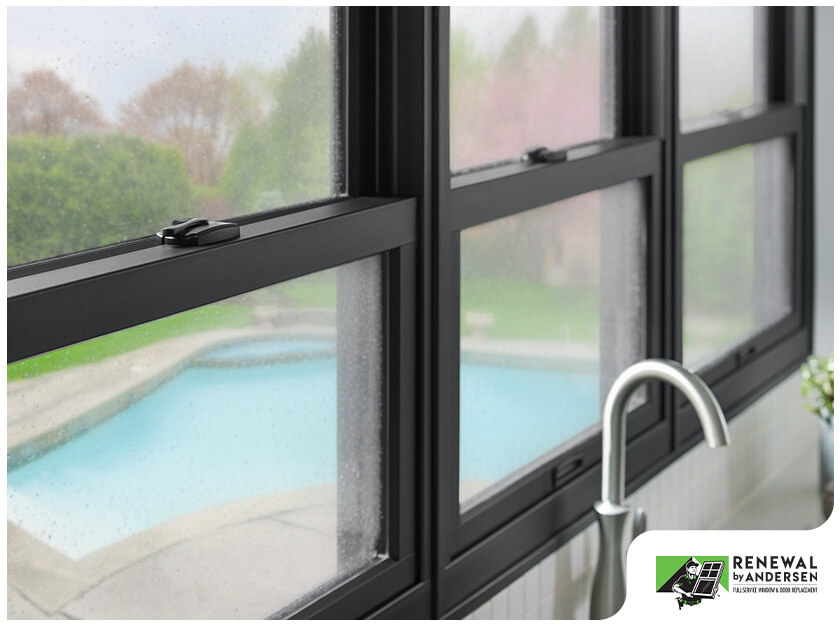
Your home’s windows open the way for natural light and ventilation to come in. They can also be a source of moisture, which is less ideal. If you’ve noticed your windows sweating during summer or other parts of the year, you’re probably wondering why it happens, whether it’s a bad sign and what you can do to reduce it. This guide covers everything you need to know.
Window condensation forms when the temperature and humidity are higher on one side of a window than on the other. The cool window surface allows water vapor to collect as droplets. If you’ve ever placed a cold drink outdoors on a humid summer’s day, you’ve probably noticed the same thing.
When it comes to windows, condensation happens for a few reasons. Two major factors are humidity and energy efficiency.
In summer, the heat and humidity outside your home naturally rise. With an energy-efficient window, the heat remains trapped outside. The cooler air inside keeps the glass pane cool, allowing humidity to form on the window’s exterior. The temperature difference becomes even more exaggerated since you’re likely running an air conditioner inside your home.
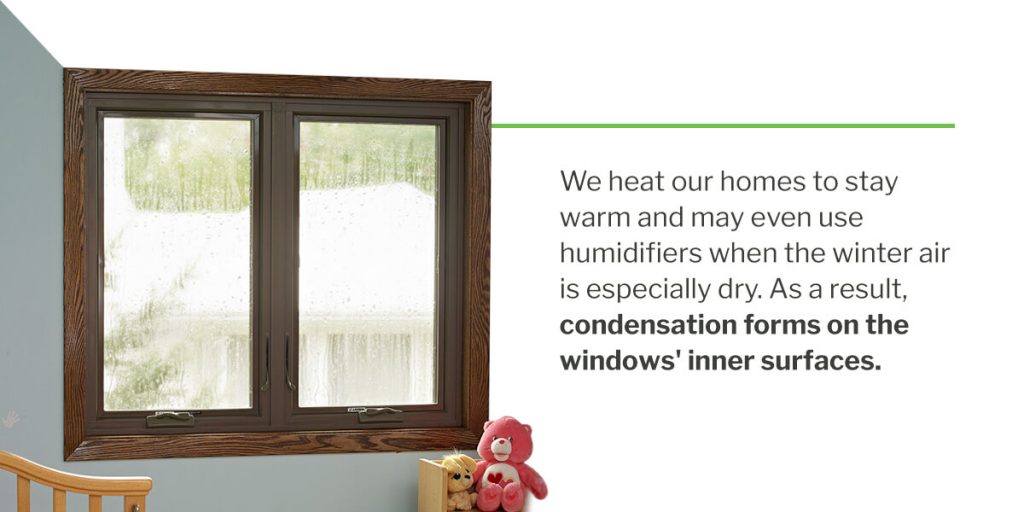
During the colder months, the effect is reversed. We heat our homes to stay warm and may even use humidifiers when the winter air is especially dry. As a result, condensation forms on the windows’ inner surfaces.
Some people mistakenly believe that energy-efficient glass is less likely to experience condensation. However, low-emissivity (low-E) windows and other thermally efficient options keep the glass cooler, instead of heating with the warmer interior or exterior. As a result, you may see more condensation.
The good news is that this type of condensation is a sign that your window is working well and maintaining excellent thermal efficiency.
Window condensation can be undesirable or harmless depending on the context.
Summer condensation generally isn’t cause for concern since it occurs on your windows’ outer panes. It may not look great, but it offers no real threat.
To some extent, summer condensation is actually a great sign. It means that your windows are effectively sealed and deliver excellent thermal efficiency, keeping cool air inside. As a result, the panes stay cool and create a place for condensation to form.
Winter condensation may also indicate a thermally efficient window, but it can be a concern since it forms indoors. While summer condensation evaporates as the sun rises, winter condensation pools inside your home, where it can warp wood and encourage mold growth.
It’s a good idea to dry the windows and frames regularly during winter to prevent moisture damage, especially in more humid spaces like the kitchen or bathroom. If you’re considering window replacement, you might want to look into more moisture-resistant frame materials that will be less affected by any condensation from the panes.
A third type of condensation can occur between glass panes in either season, and it’s always cause for concern. Windows with two or three panes are typically sealed to contain an inert argon gas blend that forms an insulating layer between them. Condensation between panes only occurs when the window seals are damaged, allowing air and moisture to enter.
The problem here is twofold. First, internal condensation may cause warping or mold growth. Second, damaged window seals allow the insulating gas to escape, which lowers thermal efficiency. If you see this kind of condensation, you should contact a window expert immediately.
While you can’t completely avoid window sweat, there are a few ways to reduce it if the condensation bothers you.
Adjusting your home’s thermostat can counteract the high temperature and humidity difference. While we don’t recommend equalizing the indoor and outdoor temperatures completely, moving away from temperature extremes can be helpful.
Instead of lowering your air conditioning to a temperature cold enough to need a sweater in summer, set the thermostat to a point where your home is merely comfortable. This approach will significantly reduce condensation.
Most homes have extractor fans in the kitchen and bathroom. Using these while cooking or showering can significantly reduce indoor humidity levels, which is a big help in preventing winter condensation.
Showers, baths and even flushing the toilet can elevate bathroom humidity. Kitchens can also get humid, especially when you’re cooking on the stove or washing dishes.
Keeping the doors to these rooms closed can prevent humidity from overtaking the rest of your home. You might also consider opening the windows so the more humid air can vent out of your home. Your bathroom probably has a fan for ventilation, which can also be helpful to use during and after showers.
Air-drying your laundry indoors can significantly increase the humidity. If you can, hang your clothes outside to avoid raising the humidity in your home. Otherwise, consider drying your clothing in a room you can close off with the windows open. If there’s space in your bathroom, the ventilation fan can be a big help.
If you have a washing machine and tumble dryer, make sure they’re adequately vented. A load of laundry can release more moisture into the air than you might expect, raising the humidity significantly. A properly vented machine will vent this moisture outdoors, while an improperly sealed one will vent it into your home.
You can also reduce summer condensation by installing shades and shutters on the windows. Strategically planted trees that keep window exteriors cool will have a similar effect.

Condensation isn’t a bad thing, but energy inefficiency is. Don’t settle for windows that fail to keep your home cool in the summer and warm in the winter. Choose the energy efficiency and reliable performance of high-quality windows.
Contact Renewal by Andersen to discuss your needs and how our products can help.